“I think that actual life supplies a writer with characters much less than is thought. Of course there must be a beginning to every conception, but so much change seems to take place in it at once, that almost anything comes to serve the purpose — a face of a stranger, a face in a portrait, almost a face in the fire.
And people in life hardly seem to be definite enough to appear in print. They are not good or bad enough or clever or stupid enough, or pitiful enough. They would have to be presented by means of detailed description, and would not come through in talk. I think that the reason why a person is often angered by a supposed portrait of himself, is that the author leaves in some recognizable attributes, while the conception has altered so much that the subject is justified in thinking there is no resemblance.
And I believe that we know much less of each other than we think, that it would be a great shock to find oneself suddenly behind another person’s eyes. The things we think we know about each other, we often imagine and read into. I think this is another reason why a supposed portrait gives offense. It is really far from the truth.
In cases where a supposed portrait of some living person has caused trouble, I have thought that the explanation lies in these things, and that the author’s disclaimer of any intention of portraiture is in the main sincere and just. Read More→
The post Should writers draw characters and plots from real life? appeared first on Literary Ladies Guide.
]]>“I think that actual life supplies a writer with characters much less than is thought. Of course there must be a beginning to every conception, but so much change seems to take place in it at once, that almost anything comes to serve the purpose — a face of a stranger, a face in a portrait, almost a face in the fire.
And people in life hardly seem to be definite enough to appear in print. They are not good or bad enough or clever or stupid enough, or pitiful enough. They would have to be presented by means of detailed description, and would not come through in talk. I think that the reason why a person is often angered by a supposed portrait of himself, is that the author leaves in some recognizable attributes, while the conception has altered so much that the subject is justified in thinking there is no resemblance.
And I believe that we know much less of each other than we think, that it would be a great shock to find oneself suddenly behind another person’s eyes. The things we think we know about each other, we often imagine and read into. I think this is another reason why a supposed portrait gives offense. It is really far from the truth.
In cases where a supposed portrait of some living person has caused trouble, I have thought that the explanation lies in these things, and that the author’s disclaimer of any intention of portraiture is in the main sincere and just.
A plot is like the bones of a person, not interesting like expression or signs of experience, at the support of the whole. As regards plots, I find real life no help at all. Real life seems to have no plots. And as I think a plot desirable and almost necessary, I have this grudge against life.”
— Ivy Compton-Burnett: A Conversation, Orion I
The post Should writers draw characters and plots from real life? appeared first on Literary Ladies Guide.
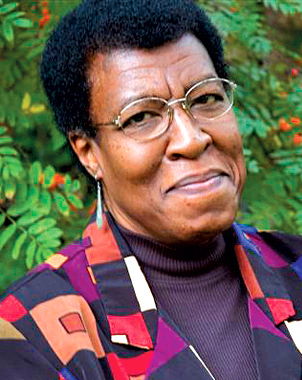
]]>I have advice in just a few words. The first, of course, is to read. It’s surprising how many people think they want to be writers but they don’t really like to read books.
And the second is to write every day, whether you like it or not. Screw inspiration.
The third is to forget about talent, whether or not you have any. Because it doesn’t really matter. I mean, I have a relative who is extremely gifted musically, but chooses not to play music for a living. It is her pleasure, but it is not for a living. And it could have been. She’s gifted; she’s been doing it ever since she was a small child and everyone has always been impressed with her.
. . . . . . . . .
You might also like:
Octavia Butler Quotes on Writing and Human Nature
. . . . . . . . . . .
On the other hand, I don’t feel I have any particular literary talent at all. It was what I wanted to do, and I followed what I wanted to do, as opposed to getting a job doing something that would make more money, which would make me miserable. This is the advice that I generally give to people who are thinking about becoming writers.
It’s certainly not a matter of sitting there and having things fall from the sky.
— Octavia Butler, From Conversations with Octavia Butler (2010),
The post What’s your best advice for beginning writers? appeared first on Literary Ladies Guide.
]]>I have advice in just a few words. The first, of course, is to read. It’s surprising how many people think they want to be writers but they don’t really like to read books.
And the second is to write every day, whether you like it or not. Screw inspiration.
The third is to forget about talent, whether or not you have any. Because it doesn’t really matter. I mean, I have a relative who is extremely gifted musically, but chooses not to play music for a living. It is her pleasure, but it is not for a living. And it could have been. She’s gifted; she’s been doing it ever since she was a small child and everyone has always been impressed with her.
. . . . . . . . .
You might also like:
Octavia Butler Quotes on Writing and Human Nature
. . . . . . . . . . .
On the other hand, I don’t feel I have any particular literary talent at all. It was what I wanted to do, and I followed what I wanted to do, as opposed to getting a job doing something that would make more money, which would make me miserable. This is the advice that I generally give to people who are thinking about becoming writers.
It’s certainly not a matter of sitting there and having things fall from the sky.
— Octavia Butler, From Conversations with Octavia Butler (2010), interview with Randall Kenan, 1990
. . . . . . . . .
The post What’s your best advice for beginning writers? appeared first on Literary Ladies Guide.
]]>How much do you want your stories and novels to be analyzed, rather than enjoyed for their own sake? Sometimes the over-analysis that students have to do destroys the pleasure of reading.
On the other hand, delving into deeper meanings and insights can expand the experience of reading. Where does a reader find the balance?
Last fall I received a letter from a student who said she would be “graciously appreciative” if would tell her “just what enlightenment” I expected her to get from each of my stories. I suspect she had a paper to write.
I wrote her back to forget about enlightenment and just try to enjoy them. I knew that was the most unsatisfactory answer I could have given, of course, she didn’t want to enjoy them, she just wanted to figure them out.
In most English classes the short story has become a kind of literary specimen to be dissected. Every time a story of mine appears in a freshman anthology, I have a vision of it, with its little organs laid open, like a frog in a bottle.
. . . . . . . . . .

Flannery O’Connor Quotes on Writing and Literature
. . . . . . . . . .
I realize that a certain amount of this what-is-the-significance has to go on, but I think something has gone wrong in the process when, for so many students, this story becomes simply a problem to be solved, something which you evaporate to get Instant Enlightenment.
The post How much do authors want their work to be analyzed? appeared first on Literary Ladies Guide.
]]>How much do you want your stories and novels to be analyzed, rather than enjoyed for their own sake? Sometimes the over-analysis that students have to do destroys the pleasure of reading.
On the other hand, delving into deeper meanings and insights can expand the experience of reading. Where does a reader find the balance?
Last fall I received a letter from a student who said she would be “graciously appreciative” if would tell her “just what enlightenment” I expected her to get from each of my stories. I suspect she had a paper to write.
I wrote her back to forget about enlightenment and just try to enjoy them. I knew that was the most unsatisfactory answer I could have given, of course, she didn’t want to enjoy them, she just wanted to figure them out.
In most English classes the short story has become a kind of literary specimen to be dissected. Every time a story of mine appears in a freshman anthology, I have a vision of it, with its little organs laid open, like a frog in a bottle.
. . . . . . . . . .
Flannery O’Connor Quotes on Writing and Literature
. . . . . . . . . .
I realize that a certain amount of this what-is-the-significance has to go on, but I think something has gone wrong in the process when, for so many students, this story becomes simply a problem to be solved, something which you evaporate to get Instant Enlightenment.
A story really isn’t any good unless it successfully resists paraphrase, unless it hangs on and it expands in the mind. Properly, you analyze to enjoy, but it’s equally true the two analyze with any discrimination, you have to have enjoyed already, and I think that the best reason to hear a story read is that it should stimulate that primary enjoyment.
— Flannery O’Connor, from the collection Mystery and Manners, “On Her Own Work,” an introduction to a reading of “A Good Man is Hard to Find” at Hollins College, Virginia, in October, 1963
The post How much do authors want their work to be analyzed? appeared first on Literary Ladies Guide.
]]>If you don’t keep and guard and mature your force and above all, have time and quiet to perfect your work, you will be writing things not much better than you did five years ago.
You must find a quiet place near the best companions (not those who admire and wonder at everything one does, but those who know the good things with delight!).
You need reassurance—every artist does—but you need still more to feel “responsible for the state of your conscience” (your literary conscience, we can just now limit that quotation to), and you need to dream your dreams and go on to new and more shining ideals, to be aware of “the gleam” and to follow it.
Your vivid, exciting companionship in the office must not be your audience, you must find your own quiet center of life, and write from that to the world that holds offices, and all society, all Bohemia; the city, the country — in short, you must write to the human heart, the great consciousness that all humanity goes to make up.
Otherwise what might be strength in a writer is only crudeness, and what might be insight is only observation; sentiment falls to sentimentality—you can write about life, but never write life itself.
And to write and work on this level, we must live on it—we must at least recognize it and defer to it at every step. Read More→
The post How can a writer balance solitude and camaraderie? appeared first on Literary Ladies Guide.
]]>If you don’t keep and guard and mature your force and above all, have time and quiet to perfect your work, you will be writing things not much better than you did five years ago.
You must find a quiet place near the best companions (not those who admire and wonder at everything one does, but those who know the good things with delight!).
You need reassurance—every artist does—but you need still more to feel “responsible for the state of your conscience” (your literary conscience, we can just now limit that quotation to), and you need to dream your dreams and go on to new and more shining ideals, to be aware of “the gleam” and to follow it.
Your vivid, exciting companionship in the office must not be your audience, you must find your own quiet center of life, and write from that to the world that holds offices, and all society, all Bohemia; the city, the country — in short, you must write to the human heart, the great consciousness that all humanity goes to make up.
Otherwise what might be strength in a writer is only crudeness, and what might be insight is only observation; sentiment falls to sentimentality—you can write about life, but never write life itself.
And to write and work on this level, we must live on it—we must at least recognize it and defer to it at every step. We must be ourselves, but we must be our best selves.
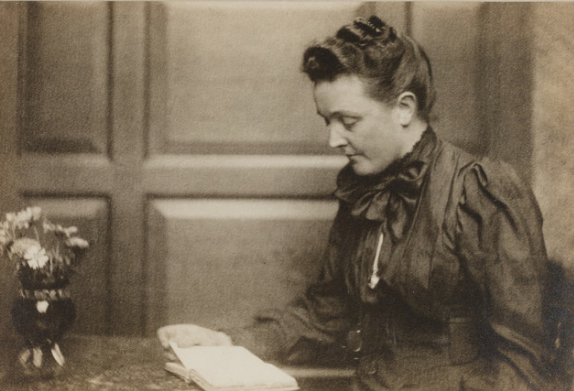
— Sarah Orne Jewett, from a letter to Willa Cather, ca. 1909
. . . . . . . . . .
. . . . . . . . . .
Read more advice on the writing life from classic women authors
in Dear Literary Ladies
The post How can a writer balance solitude and camaraderie? appeared first on Literary Ladies Guide.
]]>Do you write for an audience or market as a work is in progress, or does that ultimately make for a less desirable outcome? Is it better to write to please yourself?
Those critics or well-wishers who think that I could have written better than I have are flattering me. Always I have written at the top of my bent at that particular time. It may be that this or that, written five years later or one year earlier, or under different circumstances, might have been better for it.
But one writes as the opportunity and the material and the inclination shape themselves. This is certain: I never have written a line except to please myself. I never have written with an eye to what is called the public or the market or the trend or the editor or the reviewer.
Good or bad, popular or unpopular, lasting or ephemeral, the words I have put down on paper were the best words I could summon at the time to express the thing I wanted more than anything else to say.
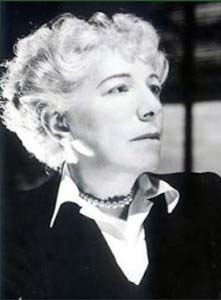
—Edna Ferber, from A Peculiar Treasure, 1939
You might also like: Success or Failure, All’s to Do Again
Here is more advice for writers directly from the words of our Literary Ladies.
The post Should you write for an audience, or to please yourself? appeared first on Literary Ladies Guide.
]]>Do you write for an audience or market as a work is in progress, or does that ultimately make for a less desirable outcome? Is it better to write to please yourself?
Those critics or well-wishers who think that I could have written better than I have are flattering me. Always I have written at the top of my bent at that particular time. It may be that this or that, written five years later or one year earlier, or under different circumstances, might have been better for it.
But one writes as the opportunity and the material and the inclination shape themselves. This is certain: I never have written a line except to please myself. I never have written with an eye to what is called the public or the market or the trend or the editor or the reviewer.
Good or bad, popular or unpopular, lasting or ephemeral, the words I have put down on paper were the best words I could summon at the time to express the thing I wanted more than anything else to say.
—Edna Ferber, from A Peculiar Treasure, 1939
You might also like: Success or Failure, All’s to Do Again
Here is more advice for writers directly from the words of our Literary Ladies.
The post Should you write for an audience, or to please yourself? appeared first on Literary Ladies Guide.
]]>Ultimately, you have to sit down and start to write. And even if all you do is type out “I can’t write this morning; I can’t write this morning; oh, bother, I can’t write this morning,” that will sometimes prime the pump and get it started. It is a matter of discipline. It is particularly a matter of discipline for a woman who has children or another job.
I think my years in the English boarding school where I had to create my own privacy were also a way of learning to create my own discipline. Now there are mornings when I joyfully sit down at the typewriter. But there are mornings when it is anything but a joy.
There are evenings when I go to the piano and the music comes pouring from my fingers. There are evenings when I’m all thumbs and I have to make myself sit there and go over scales and finger exercises before I can play anything. The same thing is true with writing.
— Madeleine L’Engle, from Madeleine L’Engle Herself, 2001
The post How do you develop the discipline to write? appeared first on Literary Ladies Guide.
]]>I wrote Their Eyes Were Watching God in Haiti. It was dammed up in me, and I wrote it in seven weeks. I wish I could write it again. In fact, I regret all of my books. It is one of the tragedies of life that one cannot have all the wisdom one is ever to possess in the beginning.
Perhaps, it is just as well to be rash and foolish for a while. If writers were too wise, perhaps no books would be written at all. It might be better to ask yourself “Why?” afterwards than before.
Anyway, the force from somewhere in Space which commands you to write in the first place, gives you no choice. You take up the pen when you are told, and write what is commanded. There is no agony like bearing an untold story inside you.
— Zora Neale Hurston, Dust Tracks on a Road: An Autobiography, 1942
The post Do I Have Enough Wisdom to Be a Good Writer? appeared first on Literary Ladies Guide.
]]>Is it better to be extremely ambitious, or rather modest? Probably the latter is safer; but I hate safety, and would rather fail gloriously than dingily succeed.
—Vita Sackville-West, from a letter to Virginia Woolf, August, 1928
The post Is it better to be a modest success than to risk failure? appeared first on Literary Ladies Guide.
]]>One of the most helpful tools a writer has is [her] journals. Whenever someone asks how to become an author, I suggest keeping a journal. A journal is not a diary, where you record the weather and the engagements of the day. A journal is a notebook in which one can, hopefully, be ontological.
A little more pragmatically, a journal, at least one that is not written for publication, and mine most certainly are not, is a place where you can unload, dump, let go. It is, among other practical things, a safety valve.
If I am in the slough of despond, if I am in a rage, if I am, as so often, out of proportion and perspective, then, once I have dumped it all in the journal, I am able to move from subjectivity to at least an approach to objectivity, and my family has been spared one of Madeleine’s excessive moods.
A journal is also a place in which joy gets recorded, because joy is too bright a flame in me not to burn if it doesn’t get expressed in words. And it’s where I jot down ideas for stories, descriptions of a face seen on a subway, a sunset seen over the Hudson, or our Litchfield Hills.
—Madeleine L’Engle, A Circle of Quiet, 1972

The post How does keeping a journal help a writer’s practice? appeared first on Literary Ladies Guide.
]]>One of the most helpful tools a writer has is [her] journals. Whenever someone asks how to become an author, I suggest keeping a journal. A journal is not a diary, where you record the weather and the engagements of the day. A journal is a notebook in which one can, hopefully, be ontological.
A little more pragmatically, a journal, at least one that is not written for publication, and mine most certainly are not, is a place where you can unload, dump, let go. It is, among other practical things, a safety valve.
If I am in the slough of despond, if I am in a rage, if I am, as so often, out of proportion and perspective, then, once I have dumped it all in the journal, I am able to move from subjectivity to at least an approach to objectivity, and my family has been spared one of Madeleine’s excessive moods.
A journal is also a place in which joy gets recorded, because joy is too bright a flame in me not to burn if it doesn’t get expressed in words. And it’s where I jot down ideas for stories, descriptions of a face seen on a subway, a sunset seen over the Hudson, or our Litchfield Hills.
—Madeleine L’Engle, A Circle of Quiet, 1972
The post How does keeping a journal help a writer’s practice? appeared first on Literary Ladies Guide.
]]>My methods of work are very simple & soon told. My head is my study, & there I keep the various plans of stories for years some times, letting them grow as they will till I am ready to put them on paper. Then it is quick work, as chapters go down word for word as they stand in my mind . . . I never copy, since I find by experience that the work I spend the least time upon is best liked by critics & readers.
While a story is under way I lie in it, see the people, more plainly than the real ones, round me, hear them talk, & am much interested, surprised, or provoked at their actions, for I seem to have no power to rule them, & can simply record their experiences & performances.
— Louisa May Alcott, from a letter, 1887
The post Any quick tips for plot and character development? appeared first on Literary Ladies Guide.
]]>